Solid Gold Explained: What's the Real Difference Between 10K, 14K, and 18K?
If you've spent any time shopping for gold jewelry, you've seen the karat numbers — 10K, 14K, 18K — stamped on every listing. They're not marketing fluff. They tell you exactly how much real gold is in the piece you're about to wear every day, and they change how it looks, feels, and holds up over time.
At VIECLAT, every piece is cast in solid gold — never plated, never filled. That means the gold isn't a thin layer over another metal; it's mixed all the way through. The karat number just tells you the ratio of pure gold to other metals in that mix.
What 10K, 14K, and 18K Actually Mean
Pure gold is 24 karat, but 24K is too soft to wear as everyday jewelry — it scratches and bends easily. So gold is alloyed with metals like copper, silver, and palladium to make it durable enough for a ring you'll wear every day.
- 10K gold is 41.7% pure gold. It's the most durable and budget-friendly of the three, with a slightly lighter, more muted gold tone.
- 14K gold is 58.3% pure gold. It's the most popular choice for everyday fine jewelry — a solid middle ground between richness of color and everyday durability.
- 18K gold is 75% pure gold. It has the deepest, warmest color of the three, closest to pure gold, with a softer feel underfoot that rewards slightly more careful wear.
None of these are "better" gold — they're different trade-offs. If you're rough on your jewelry or wear it daily without taking it off, 10K or 14K will hold up beautifully. If you want the richest color and don't mind a touch more care, 18K is worth the difference.
How to Tell It's Really Solid Gold
Every genuine solid gold piece carries a hallmark — a tiny stamp reading 10K, 14K, or 18K, struck directly into the metal. It's a permanent, physical guarantee of what you're wearing, not just a claim on a product page. If a piece doesn't carry that stamp, it isn't solid gold — it's plated or filled, and the "gold" is only a coating that will eventually wear through.
This is also why solid gold is naturally hypoallergenic and safe for sensitive skin — there's no base metal hiding underneath to react with your skin as a coating thins.
Choosing the Right Karat for You
A good rule of thumb: think about how the piece will actually live on you.
- Rings and bracelets that see daily knocks against desks, doorframes, and dishes do well in 10K or 14K.
- Necklaces and earrings, which see less friction, can comfortably go up to 18K for a richer color.
- Stackable pieces you'll wear together, like this Freeform Loop Bypass Ring or this Abstract Loop Statement Ring, are easiest to mix and match when you pick one karat and stay consistent across the set.
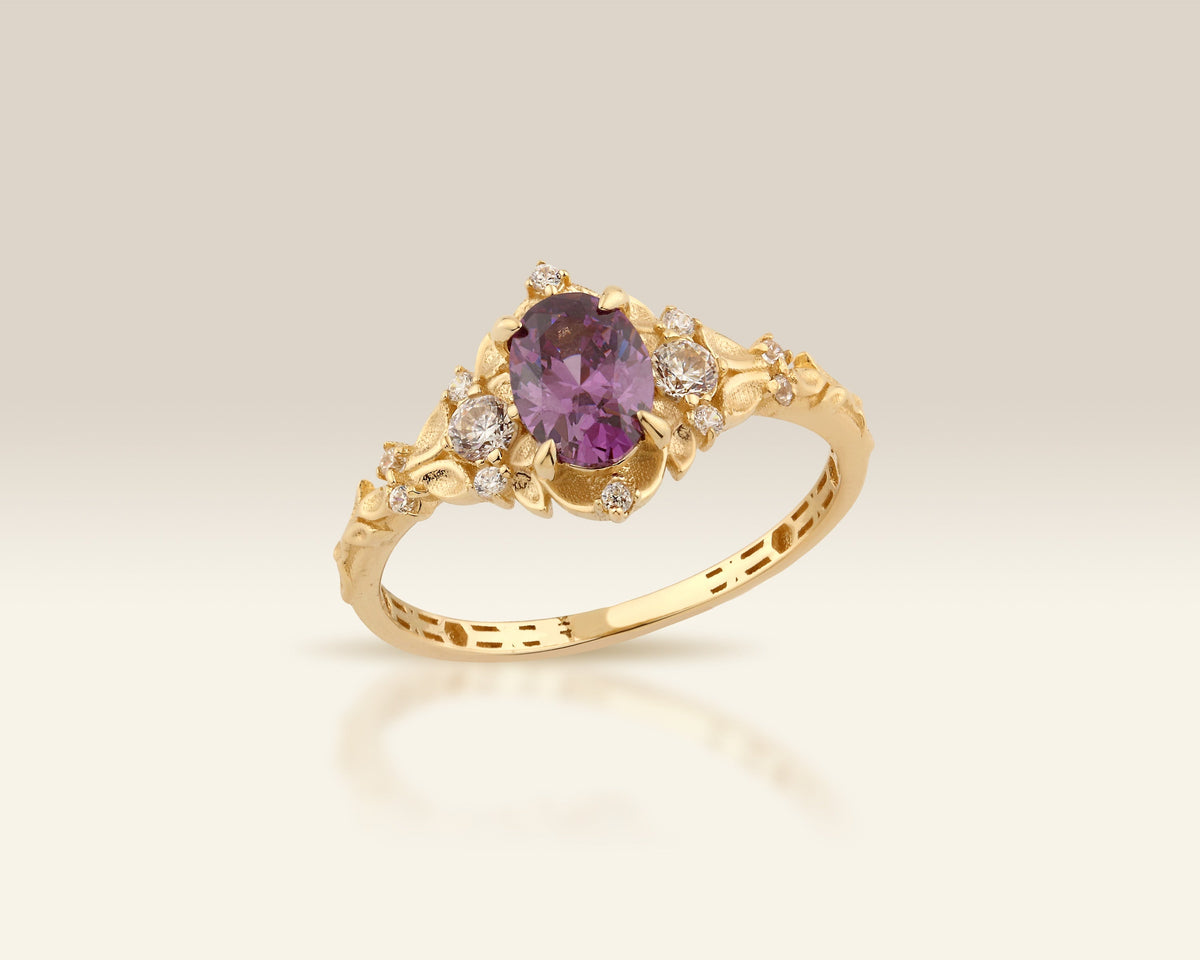
Every VIECLAT design — from the Oval Amethyst Halo Ring to the Triple Band Pavé Ring to the Laurel Leaf Bypass Ring — is available in 10K, 14K, and 18K, and in yellow, white, or rose gold, so you can choose the karat that fits how you'll actually wear it, not just how it looks in a photo.
Not sure which karat is right for your lifestyle, or want help picking a ring size? Reach out — we're happy to help you choose a piece that's built to last.