Promise Ring vs. Engagement Ring: What's the Difference?
Shopping for a meaningful ring and not sure which category fits? Promise rings and engagement rings get confused constantly — here's the actual distinction.
Engagement Rings: A Formal Commitment
An engagement ring specifically signals an intent to marry. It's typically given as part of a proposal, worn on the ring finger of the left hand (per Western tradition), and is generally understood — without needing explanation — to mean a wedding is being planned. There's a widely recognized visual language around engagement rings: solitaire or halo settings, a prominent center stone, worn alongside a wedding band after the ceremony.
Promise Rings: A Personal Commitment, Undefined
A promise ring signals commitment without a fixed, universally understood meaning. It can represent an early relationship milestone, a commitment to eventually get engaged, a symbol of fidelity, or even a personal promise to yourself — the meaning is defined by whoever's wearing it and whoever gave it, not by convention. This makes promise rings more flexible: they don't require a proposal moment, a specific ring finger, or even a romantic relationship at all.
How to Tell Them Apart at a Glance
There's no strict design rule, but a few patterns hold generally true:
- Engagement rings tend toward a clear focal stone — solitaire, halo, or cluster settings designed to draw the eye.
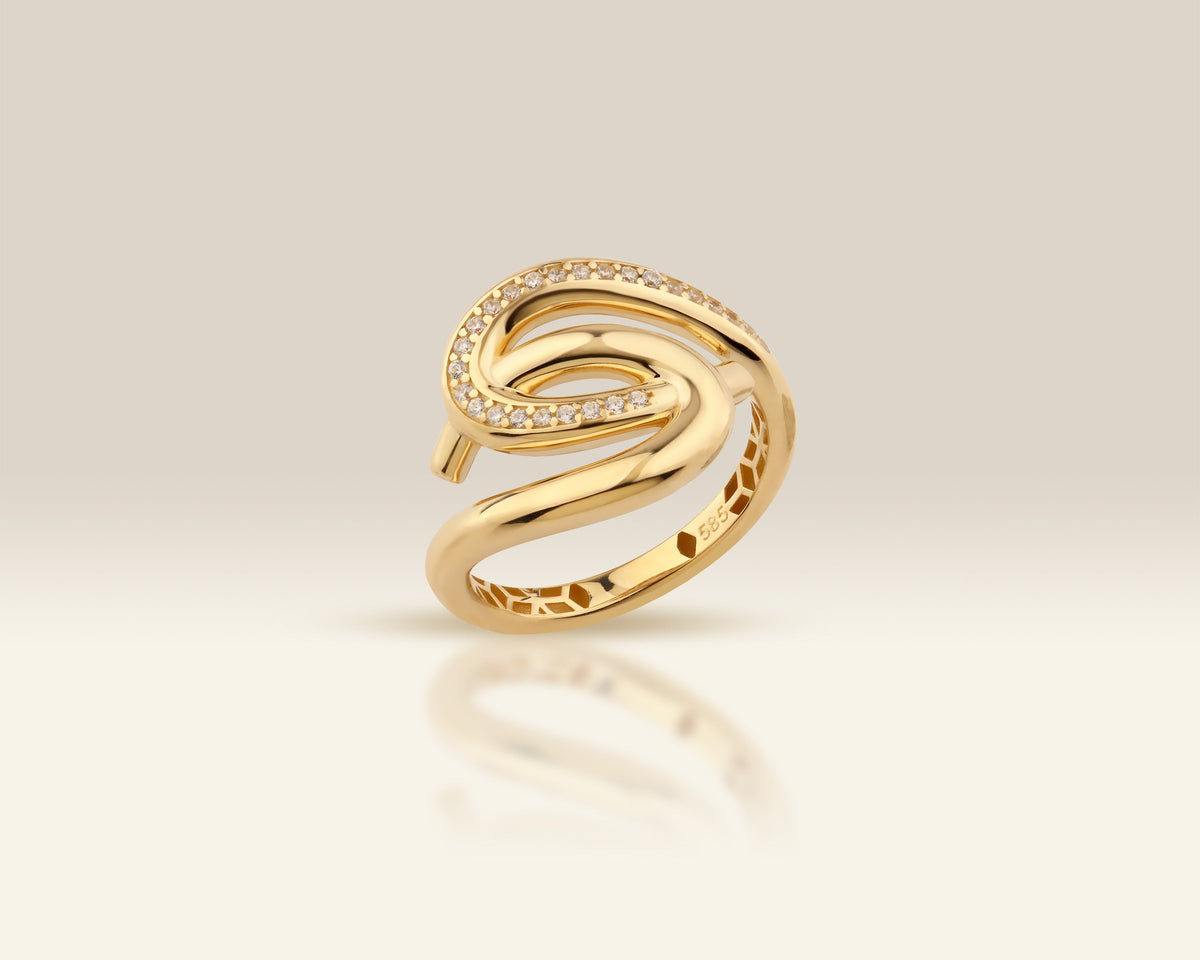
- Promise rings tend toward simpler, more everyday designs — bands, delicate stacking rings, or symbolic motifs meant for daily wear without drawing attention as a "big" ring.
Which One Should You Buy?
If you're shopping for an engagement moment, look for a clear centerpiece design — our Oval Amethyst Halo Ring is a good example of that focal-stone approach. If you're looking for something more personal and everyday, the Stack & Layer collection is built exactly for that kind of quiet, meaningful piece.