Why Was Gold Sacred in Ancient Egypt?
To the ancient Egyptians, gold wasn't just valuable — it was divine. Understanding why gives real context to a material we now mostly think about in terms of karat and price.
The Flesh of the Gods
Egyptian mythology held that the gods had skin made of gold, bones of silver, and hair of lapis lazuli. Gold's untarnishing shine made it feel otherworldly — a metal that didn't decay the way everything else did, which fit perfectly with a culture deeply preoccupied with eternity and the afterlife.
The sun god Ra was central to this belief. Gold's warm, sun-like color made it Ra's earthly metal, and pharaohs — considered living gods — were buried in it accordingly. Tutankhamun's death mask, cast from over 10 kilograms of solid gold, is the most famous surviving example of just how literally this belief was taken.
Not Just for Pharaohs
While the grandest gold belonged to royalty, gold jewelry filtered down through Egyptian society more than most people assume. Amulets, rings, and collars in gold were worn by officials, priests, and wealthier citizens as protective and status symbols — a belief that a little of gold's permanence rubbed off on whoever wore it.
An Idea That Outlasted the Empire
Egypt's civilization is gone, but the core idea — that gold represents something permanent, something that doesn't fade or corrode — is exactly why solid gold jewelry still holds its value and its shine today. It's the same physical property, just without the mythology attached.
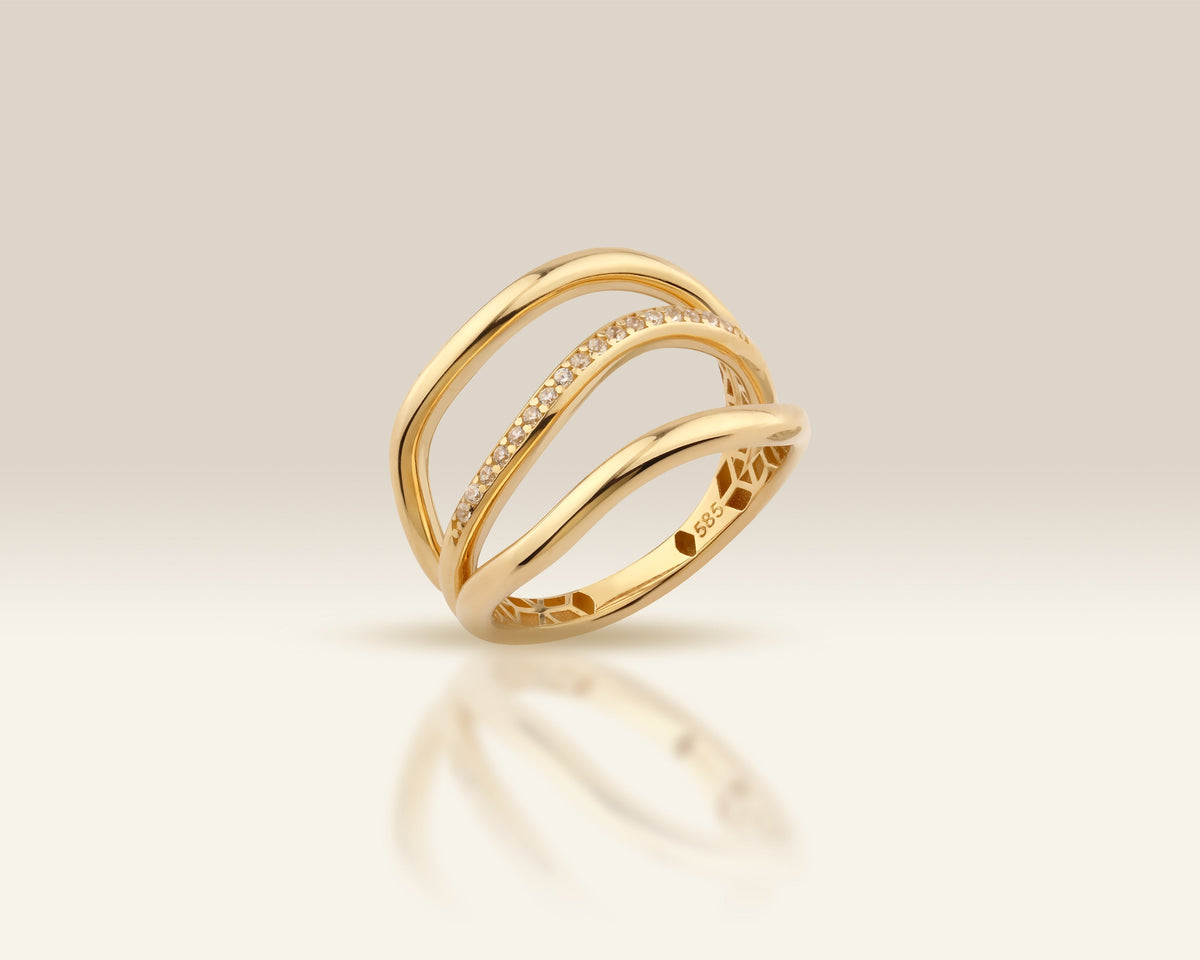
See what that permanence looks like in practice in our Rings collection, or read how to care for solid gold to keep that shine for good.